

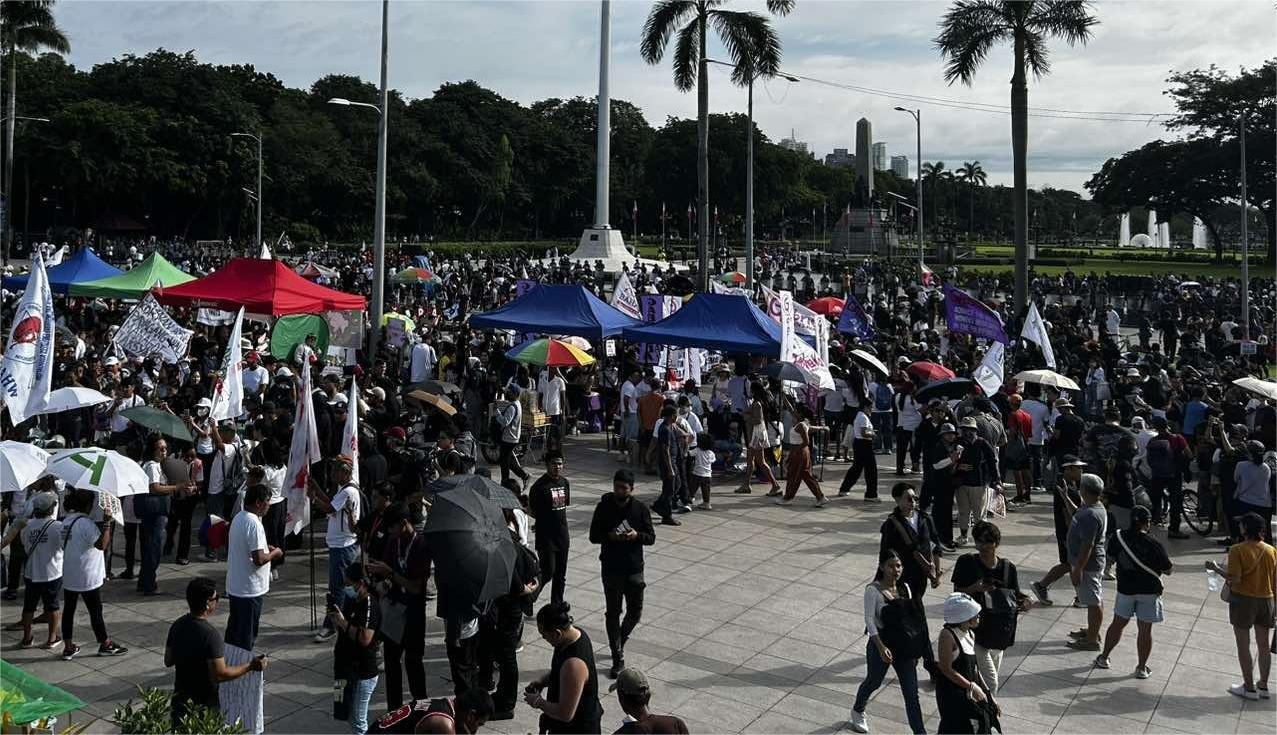
Manila, Philippines — Tens of thousands of Filipinos took to the streets over the weekend to denounce alleged large-scale corruption in government flood control projects, marking one of the country’s biggest protest movements in recent years.
The demonstrations, dubbed the “Trillion Peso March” and “Baha sa Luneta”, converged at Luneta Park and EDSA Shrine on September 21, coinciding with the anniversary of Martial Law. Protesters carried placards demanding accountability, chanting calls to “end corruption” and “stop the flood of stolen funds.”
Billions in Questioned Projects
Government data shows that since 2022, more than ₱545 billion (about US$9.5 billion) has been allocated to nearly 9,855 flood control projects nationwide. Critics say many of these projects were either overpriced, left unfinished, or funneled to a small circle of contractors. Reports highlight that just 15 firms cornered 20% of all contracts, raising questions of favoritism and collusion. (Reuters)
Church and Civil Society Lead Calls
The protests were organized by a broad coalition of student groups, civic organizations, and church leaders. In a joint pastoral letter, bishops urged Filipinos to take part, framing the issue not only as misuse of public funds but as a moral failure that puts vulnerable communities at risk during disasters. (Licas News)
Clashes and Arrests
While most rallies were peaceful, clashes broke out near the presidential palace in Manila, where dozens of protesters and police officers were injured. Authorities confirmed multiple arrests after scuffles escalated. (AP News)
Marcos Responds
President Ferdinand Marcos Jr. acknowledged the public outrage, urging demonstrators to remain nonviolent. He announced the creation of an independent commission to investigate the flood control projects, vowing that “no one will be spared” if wrongdoing is proven. (Washington Post)
Why It Matters
The Philippines is among the most disaster-prone nations in the world, with millions exposed to typhoons and floods every year. Corruption in infrastructure not only wastes public money but also puts lives at greater risk when defenses fail. Activists say the protests will continue until there are concrete reforms in government procurement, auditing, and contractor accountability.