

SWEIDA, Syria — Israel confirmed it bombed the Syrian army’s military headquarters in Damascus on Wednesday, following its warning to the Syrian government to halt attacks on the Druze minority in the southern province of Sweida. The warning came amid escalating sectarian violence that has reportedly killed nearly 250 people.
Syrian forces entered the predominantly Druze city of Sweida on Tuesday, officially to implement a ceasefire brokered with local community leaders. The ceasefire followed days of deadly clashes between Druze fighters and Bedouin tribes, which left over 100 people dead. However, eyewitnesses claimed that Syrian government troops joined Bedouin fighters in attacking Druze civilians and combatants, resulting in what was described as a “bloody rampage” through the city.
The outbreak marks one of the most intense episodes of violence in Syria in recent months, echoing earlier clashes in April and May that also involved Druze groups and government forces, resulting in over 100 casualties.
Tensions have heightened under the Islamist-led authorities in Syria, who have reportedly had strained relationships with the country’s diverse ethnic and religious communities since they ousted former President Bashar al-Assad in December.
Israeli Defense Minister Israel Katz issued a stern warning, urging Damascus to pull back from Sweida. “As we have made clear and warned, Israel will not abandon the Druze in Syria and will enforce the demilitarization policy we have decided on,” Katz said. He added that Israeli strikes would escalate if Syrian forces failed to heed the warning.
Shortly after Katz’s statement, the Israeli military announced that it had conducted an airstrike on the Syrian regime’s military headquarters in Damascus. “A short while ago, the [Israeli military] struck the entrance of the Syrian regime’s military headquarters in the area of Damascus in Syria,” it said.
Syrian state television reported that at least two people were wounded in the strike, though the exact location was not disclosed.
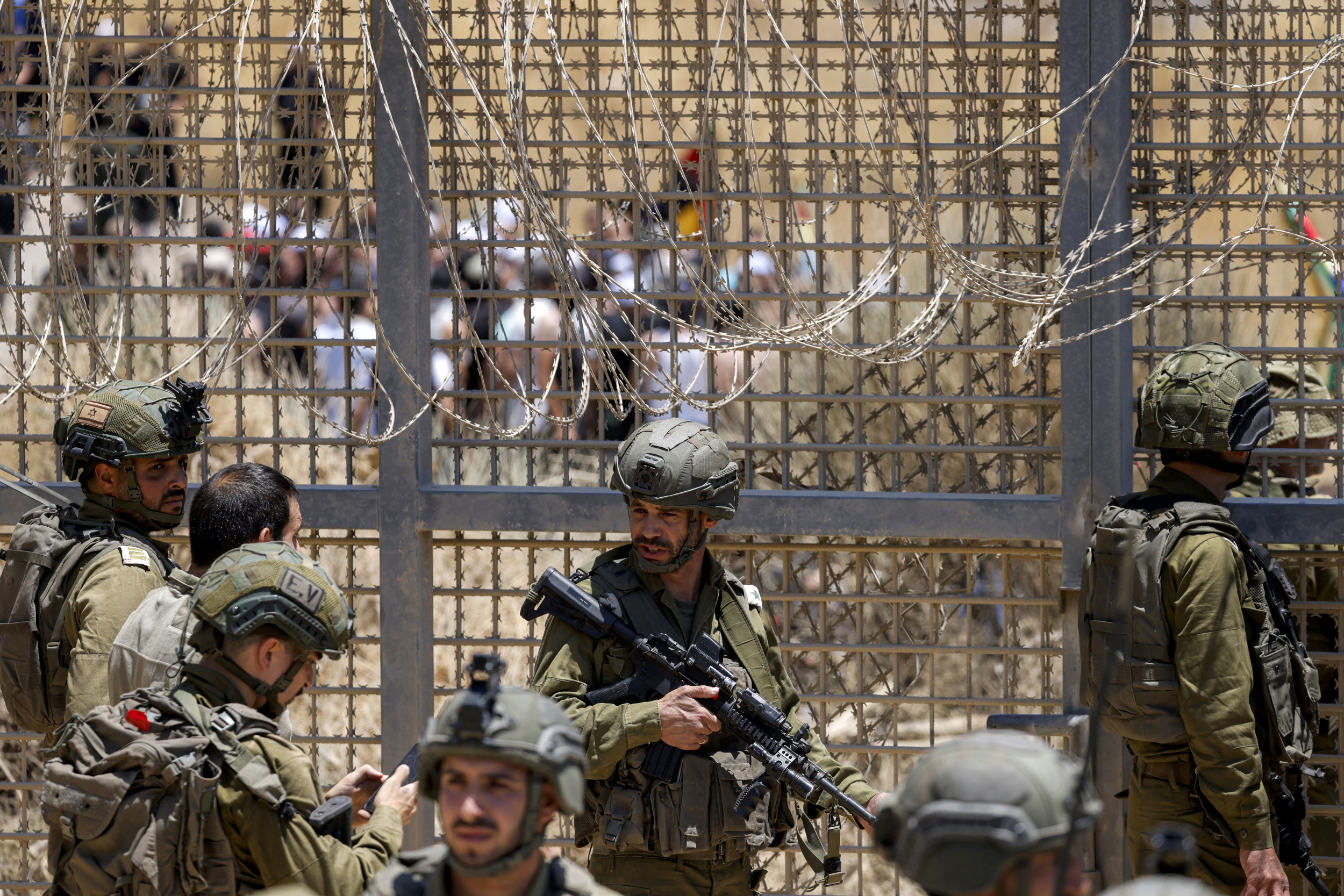
In response to the deteriorating security situation, the Israeli army said it was deploying additional troops to the armistice line between the Israeli-occupied Golan Heights and Syrian-controlled areas. “In accordance with the situational assessment, the [Israeli military] has decided to reinforce its forces in the area of the Syrian border,” read a military statement.
Sheikh Mowafaq Tarif, the spiritual leader of the Druze community in Israel, described the current violence as “an existential battle for the Druze community.”
According to the Syrian Observatory for Human Rights (SOHR), government forces have been actively fighting alongside Bedouin militias in Sweida. The UK-based monitor reported that 248 people have died since fighting erupted on Sunday, including 92 Druze—28 of whom were civilians, and 21 allegedly executed by government forces. At least 138 members of Syrian security forces and 18 allied Bedouin fighters were also reported killed.
The violence reportedly began after the abduction of a Druze vegetable vendor sparked a series of retaliatory kidnappings, reigniting long-standing tensions between the Druze and Bedouin communities.
An AFP correspondent on the ground reported ongoing clashes on Wednesday, with sporadic gunfire and artillery shelling throughout the city. Smoke was seen rising from multiple neighborhoods, and the bodies of around 30 combatants were visible in the streets—some wearing military uniforms, others in civilian clothing.
Local outlet Suwayda 24 reported “intense shelling with heavy artillery and mortars,” while the Syrian Ministry of Defense accused “outlaw groups” of initiating attacks on its forces, stating that the army was “continuing to respond to the sources of fire.”
The conflict underscores the fragile state of sectarian relations in Syria and the growing regional implications as Israel moves to assert its military stance amid the chaos.